7 Signs You Need a Certified Arborist to Inspect Your Tree
Updated March 19, 2026
Most homeowners wait too long because they are not sure what qualifies as a real problem. Use this framework to recognize when expert evaluation is the right next step.
A tree problem rarely starts with urgency. It starts with uncertainty.
You notice a lean, a few dead branches, thinning leaves, or storm damage. The question is not just “Who can cut this tree?” It is “Does this tree need pruning, treatment, support, or removal?”
Anyone can remove a tree. Fewer can tell you if it should be removed at all.
This is where a ISA certified arborist becomes valuable.
1. The Tree Is Leaning More Than It Used To
A slight lean is not always dangerous. A changing lean is.
If the angle has increased recently or the soil around the base looks lifted or cracked, the tree may be losing stability. This is especially important for trees near homes, driveways, or neighboring properties.
An arborist evaluates root stability, soil conditions, and structural balance before failure occurs.
2. Large Dead Branches Are Hanging Over Structures
Dead limbs are not just cosmetic issues. They are failure risks.
Branches over roofs, vehicles, walkways, or outdoor spaces should be evaluated quickly. Weight distribution, decay, and attachment points all affect whether a limb is likely to fall.
Deadwood is a predictable risk. Ignored deadwood becomes unpredictable damage.
3. The Canopy Is Thinning or Uneven
If sections of the tree are not leafing out normally, it may indicate stress, disease, or root issues.
Common signs include:
- sparse foliage in one section
- delayed leaf growth
- smaller-than-normal leaves
- early leaf drop
An arborist can identify whether the issue is environmental, biological, or structural—and whether it is reversible.
4. Cracks, Splits, or Cavities Are Visible
Visible damage in the trunk or major limbs often signals structural weakness.
Not all cracks mean failure is imminent, but they do require evaluation. Some can be managed. Others indicate internal decay that reduces the tree’s strength.
This is one of the most common situations where homeowners guess incorrectly.
5. You See Mushrooms or Decay Near the Base
Fungal growth at the base of a tree is often a sign of internal decay.
While not all fungi are harmful, many indicate compromised structural integrity, especially in older or stressed trees.
An arborist can assess whether the decay is superficial or a deeper risk.
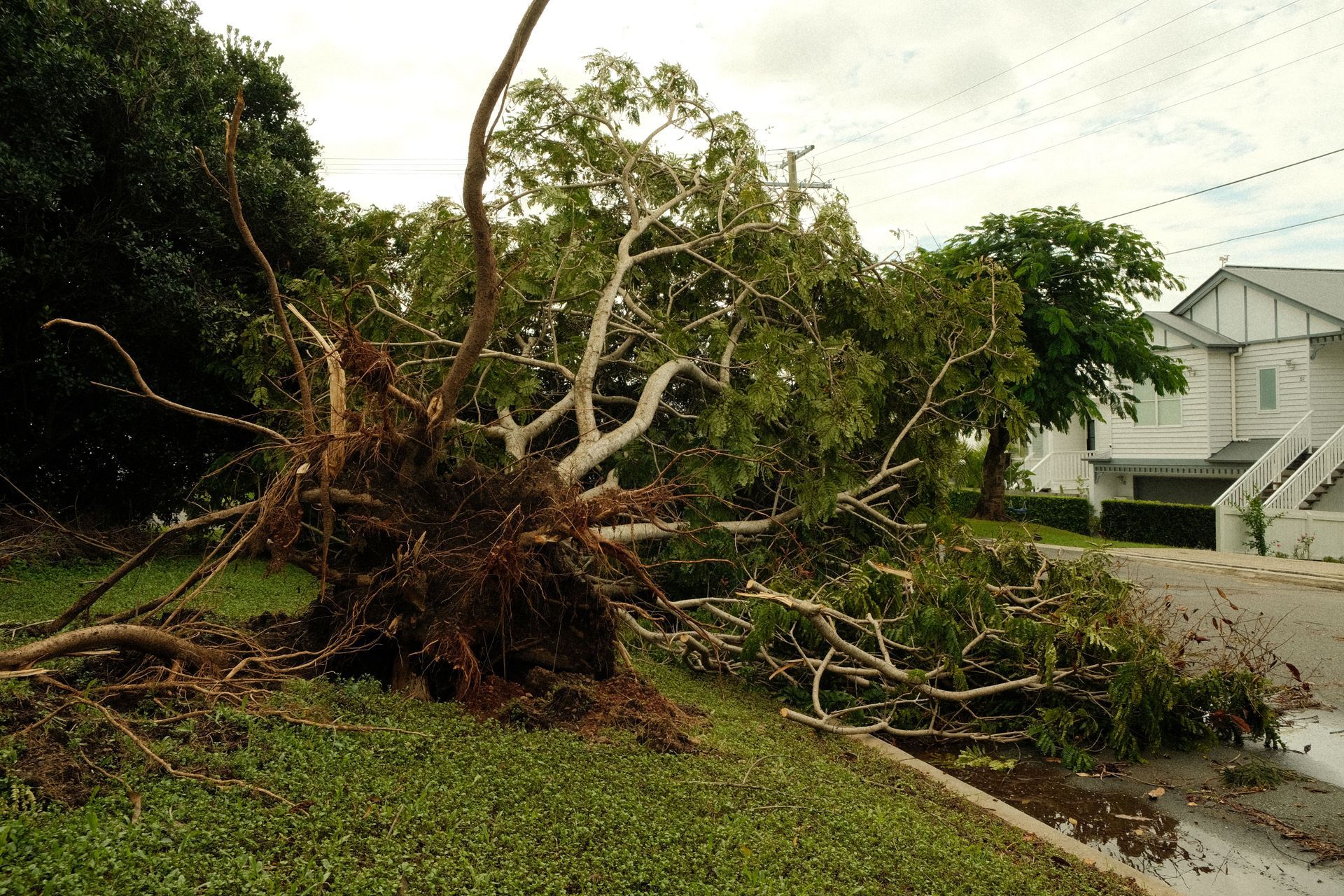
6. The Tree Was Recently Damaged by a Storm
Storm damage is not always obvious immediately.
Broken limbs, twisted branches, and root stress can weaken a tree even if it still looks intact. What appears stable today may fail later under less severe conditions.
A post-storm inspection helps determine:
- whether the tree is structurally sound
- what pruning is needed
- whether removal should be considered
7. You Are Deciding Whether to Save or Remove the Tree
This is the most important moment to involve an arborist.
Many homeowners assume removal is the safest option. Sometimes it is. Often, it is not the only option.
A certified arborist can help you evaluate:
- whether the tree can be preserved
- what corrective actions are possible
- the risk level over time
- the cost of action vs inaction
Removal is a decision. Diagnosis should come first.
What a Certified Arborist Looks For
A proper tree evaluation goes beyond surface-level observations.
A certified arborist assesses:
- structural integrity of the trunk and major limbs
- root health and soil conditions
- species-specific vulnerabilities
- signs of disease or pest activity
- previous pruning quality
- proximity to structures and targets
- likelihood of failure under stress
This level of analysis is what separates informed decisions from reactive ones.
When a Tree Can Be Saved
Not every problem tree needs to be removed.
In many cases, an arborist may recommend:
- selective pruning to reduce weight or risk
- removal of dead or compromised limbs
- soil and root-zone improvements
- monitoring over time
- structural support such as cabling or bracing
Preservation is often possible when issues are identified early.
The goal is not to cut trees. The goal is to make the right decision about them.
Why Homeowners Call Sam Tree Services for Arborist Guidance
When the decision matters, experience and credentials matter.
Sam Tree Services provides arborist consultations led by an ISA Board Certified Master Arborist, the highest level of certification in the industry. With over 26 years in business and more than 10,000 clients served, the company brings both technical expertise and local experience to every evaluation.
Homeowners choose Sam Tree Services because:
- evaluations are based on professional standards, not guesswork
- recommendations prioritize safety, preservation, and long-term outcomes
- work follows ANSI and industry best practices
- the team understands local tree conditions across Dawsonville and North Georgia
- the company is fully insured and experienced with complex tree situations
This is not just tree work. It is informed decision-making.
When to Schedule an Arborist Consultation
Call before the problem becomes obvious.
The best time to schedule an evaluation is when you notice uncertainty, not just visible damage.
Consider an inspection if:
- a tree is leaning or shifting
- branches are dying or falling
- the canopy is changing unexpectedly
- you see cracks, decay, or root issues
- a storm has impacted the tree
- you are unsure whether to prune, treat, or remove
Pro Tip
Do not wait until you are certain a tree is dangerous.
Most costly tree problems start as small, uncertain signals. Early evaluation often gives you more options, lower costs, and better outcomes.
Request an Arborist Consultation
If you have a tree that looks unhealthy, unstable, or uncertain, the next step is not removal. It is an evaluation.
Request an arborist consultation to get clear, professional guidance on whether your tree should be pruned, treated, supported, or removed.
Frequently Asked Questions
What are the signs that I need a certified arborist?
The most common signs include leaning trees, dead branches, canopy thinning, visible cracks, decay at the base, and storm damage. These indicators suggest the tree may need professional evaluation to determine risk and the best course of action.
When is the best time to call a certified arborist?
The best time is when you first notice uncertainty, not just obvious damage. Early evaluation allows for more options such as pruning or treatment instead of emergency removal later.
Can a certified arborist help save a tree instead of removing it?
Yes, a certified arborist can often recommend preservation strategies such as pruning, cabling, or treatment. Removal is only one option, and a proper evaluation helps determine if it is necessary.
How is a certified arborist different from a tree service company?
A certified arborist is trained in tree health, structure, and risk assessment, not just cutting or removal. This expertise allows for better diagnosis and more informed recommendations about what should be done.
What is the best way to choose a certified arborist?
The best approach is to verify certification, ask about experience, confirm insurance coverage, and ensure they can clearly explain their recommendations. Clear answers and structured evaluations are strong indicators of professionalism.
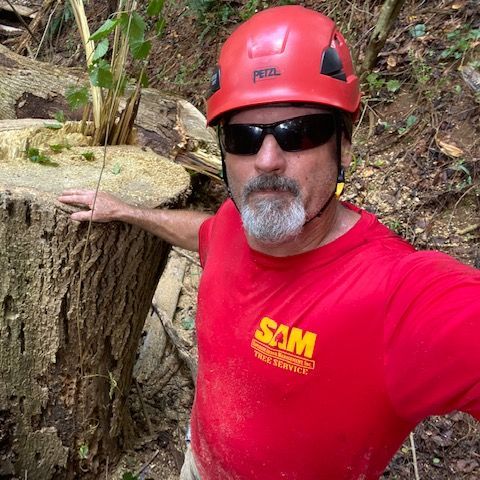
Tim Costley
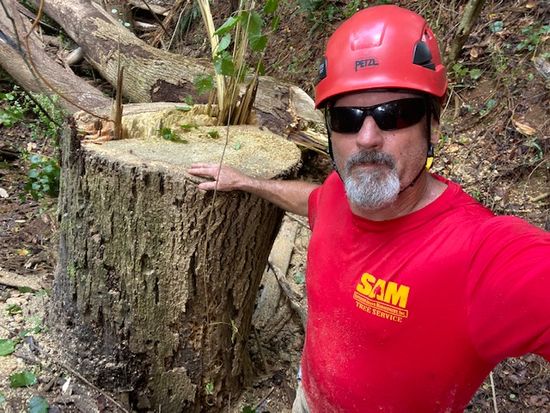
Tim Costley is the President of Superior Arbor Management, Inc. He has achieved the ISA Arborist Certification to provide the best possible tree care for S.A.M.’s customers.
*ISA Certified Arborist #SO-1925A
*ISA Tree Risk Assessment Qualification (TRAQ)
*ASCA (American Society of Consulting Arborist) Member